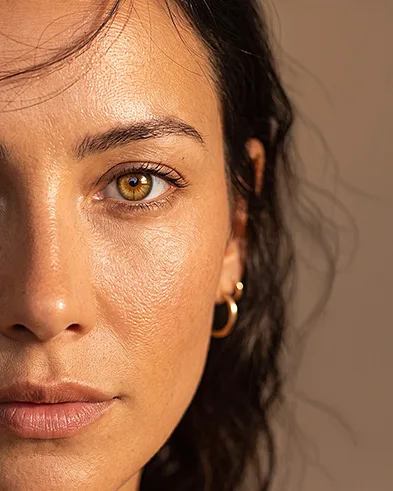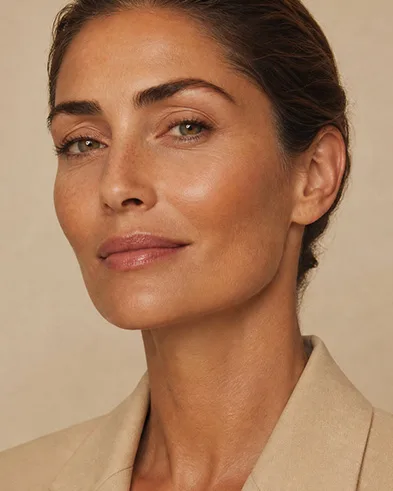
In recent years, facial plastic surgery techniques have increasingly offered more natural results, with smaller scars and faster recovery.
In this article, we explore today's main facial surgery techniques, with a focus on blepharoplasty, a technique for rejuvenating the eyes.
We also discuss the different types of facelift, explaining how these newer approaches differ from traditional ones and what their indications are, providing a clear picture of what to expect from modern facial aesthetic surgery.
Advances in facial plastic surgery: what has changed?
In recent years, facial plastic surgery has advanced considerably with the introduction of new technologies and methods. For example, the endoscopic facelift uses small cameras (endoscopes) that give the surgeon a better view of the subcutaneous tissues.
This technique results in smaller, less invasive incisions, which reduces tissue trauma and speeds up recovery. In addition to allowing greater precision, these advances offer more natural results, preserving the aesthetics of the face with a shorter recovery time and less visible scars.
In addition, blepharoplasty today offers a highly refined approach to facial rejuvenation, with increasingly natural and safe results. The evolution of surgical techniques has brought significant improvements, such as fewer visible scars and faster recovery.
Moreover, the current approach values the preservation of facial volume, ensuring that fat bags are removed in a balanced way to avoid a sunken-eye appearance.
Blepharoplasty: a technique for rejuvenating the eyes
Blepharoplasty is one of the most popular procedures in facial rejuvenation, aiming to correct eyelid sagging and eliminate excess skin, providing a revitalized and youthful look. With modern advances, the techniques are increasingly precise and less invasive.
Learn about the three main types of blepharoplasty:
- Upper blepharoplasty: removes excess skin and fat from the upper eyelid, indicated for those whose sagging interferes with their appearance or vision.
- Lower blepharoplasty: corrects fat bags and sagging in the lower eyelids, softening a tired appearance.
- Full blepharoplasty: a procedure that treats both the upper and lower eyelids in a single surgery. Indicated for patients with more pronounced signs of aging, this technique offers a broader correction, removing excess skin and fat bags in both areas.
Modern facelift: what techniques are available?
The types of facelift have evolved, allowing personalized procedures for each patient that aim for naturalness and alignment with the patient's expectations. They are:
- Endoscopic lift: a minimally invasive approach in which cameras guide the surgeon in adjusting the facial muscles, with small scars. Ideal for early signs of aging.
- Mini facelift: focused on the lower face and neck, it offers subtle results for mild sagging without the need for extensive surgery.
- Extended facelift: a more intensive variant of the mini facelift that works precisely on each muscle layer, providing greater firmness.
- Deep facelift: a complete technique indicated for significant facial rejuvenation, involving both skin removal and deep adjustments of the facial muscles, which can be combined with other procedures, such as blepharoplasty, for longer-lasting results.
Which technique is right for you?
Choosing the ideal technique depends on a number of factors, such as the patient's age, the degree of sagging and the desired results. That is why a personalized consultation is essential.
During this consultation, the surgeon will be able to evaluate your facial structure and discuss which procedures will best meet your needs and expectations.
Interested in finding out which technique is most suitable for you? Book a consultation with Dr. Rogério Leal and discover how modern techniques can transform your appearance.
This content is for informational purposes only and does not replace a consultation. Whether any procedure is indicated depends on an in-person assessment, case by case. CRM SP 90.116 | RQE 11.350.