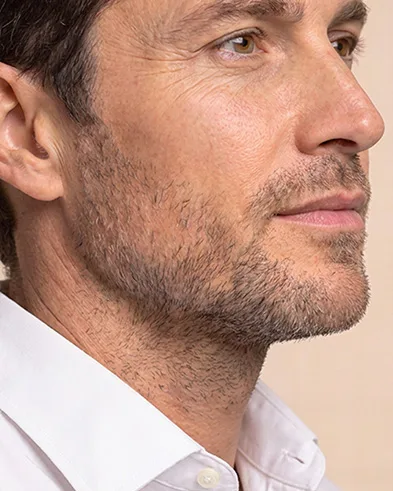
Want to know whether a facelift is recommended to achieve the result you have been searching for? Even though the doctor is the only one with the knowledge to determine the most suitable type of surgery for your case, it is always good to look for information about the procedures, if only to feel more confident.
A facelift, also called rhytidoplasty, is an aesthetic procedure performed to reduce wrinkles on the neck and face, remove excess fat and reduce skin sagging, giving a more youthful appearance. In addition, a facelift helps enhance your contours, revealing even more of your natural beauty.
At what age is a facelift recommended?
As always, it is important to stress that there is no standard recommendation. Each case has its own particularities, and it is up to the doctor and the patient to assess what kind of result they want.
A facelift is most commonly performed on patients over 40, the stage of life when the first signs of aging start to become bothersome. In general, signs of aging appear through the natural action of time, but some external factors can speed up this process, such as long periods of sun exposure, free radicals, bad habits, lack of skin care or even genetic inheritance.
That said, there is no right age to feel good about your appearance. What exists is the right opportunity.
How is a facelift performed?
First of all, it is always worth reiterating that, to ensure patient safety and the best result, every type of facial plastic surgery must be performed in a hospital setting. For this reason, do not consider professionals who offer the procedure in a doctor’s office.
Now that we have clarified a few points, let’s take a closer look at the practical side of the surgery and at the preoperative and postoperative periods.
For the doctor to assess which techniques will be used and to begin the preoperative process, a first consultation is held, during which some blood tests and an electrocardiogram will be requested.
In addition, the specialist will ask you about some daily habits that could compromise your recovery. And of course, this is the time for you to ask all your questions and build a relationship of trust with your doctor.
On the long-awaited day of your facelift surgery, it is essential that you follow all of the doctor’s recommendations and, if in doubt, do not hesitate to get in touch. The patient may receive local anesthesia or sedation, and there are cases in which general anesthesia is recommended.
This decision is made by the doctor together with the anesthesiologist during the preoperative period.
The procedure is performed through incisions that allow the doctor to pull the muscular structure of the face and reshape the tissues, which are positioned to add volume to hollow areas, repositioning the facial musculature.
The incision may be made in front of or behind the ear, in the scalp, in the temporal region or in its lower part. A second incision may be made under the chin if a neck lift is needed.
And if you are worried about the scars, know that with good professionals, advanced techniques, top-quality materials and by following all the recommendations, you will have an impeccable result, with scars so discreet that they are almost imperceptible.
The scars are located in the scalp and along the natural contours of the face and ear. The surgery may last around four to five hours, but this depends greatly on the type of technique adopted and on any combined procedures.
Get to know the types of facelift
There are several types of face and neck lift, and the choice of which one best suits your needs should be made by your doctor after an assessment.
The classic facelift can be performed with the aid of an endoscope. In this method, the musculature is detached from the bone so that it can be tightened more easily.
The extended lift is a variation of the mini facelift; its main difference is that the surgeon focuses on tightening each muscle layer.
Finally, the deep facelift is a more complete technique than the others, since it also involves removing excess skin from the upper and lower eyelids. For the result to be perfect, this procedure can be combined with other surgeries.
Learn more about facelifts
Want to know more about facelifts and their indications? Then head over to Dr. Rogério Leal’s social media and leave your questions. If you would like to book a consultation, the doctor sees patients in São Paulo, Rio de Janeiro and Curitiba. Appointments can be made via the WhatsApp number at the bottom of the page.
This content is for informational purposes only and does not replace a consultation. Whether any procedure is indicated depends on an in-person assessment, case by case. CRM SP 90.116 | RQE 11.350.