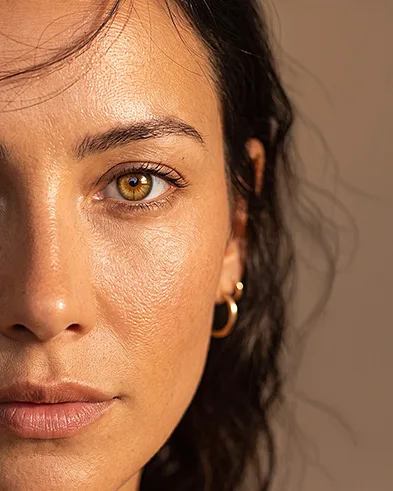
You know that droopy look that gives the impression of constant tiredness?
Popularly known as “dead-fish eyes”—an expression we avoid because it tends to be used pejoratively—the droopy look is the result of a condition caused by the aging process or, in younger people, by genetic factors. Technically, we refer to drooping of the eyelids as eyelid ptosis.
In the office and on our official communication channels, the main question asked by the patients who come to us is: how can eyelid ptosis be treated?
First, it is worth noting that there are cases in which the patient has, in addition to a drooping eyelid, greater laxity in one eye, which impairs the symmetry of the eyes.
When you come across someone with eyelid ptosis, you can notice a change in the opening of the eye and, usually, one eye looks a little more “closed” than the other. Have you ever noticed?
In some cases, ptosis may be accompanied by wrinkles around the eyes and, in more advanced cases of laxity, fat bags.
How can it be treated? Drooping eyelids can be resolved with Eyelid Ptosis Correction Surgery. However, for patients seeking greater rejuvenation of the eye area, we recommend Structured Blepharoplasty. The procedure—one of the most frequently performed among our patients—consists of performing two surgeries simultaneously: ptosis correction and blepharoplasty, which is the removal of skin and fat bags from the eye area.
Want to know more? Click the button below and talk to our team. We are always ready to assist you.
This content is for informational purposes only and does not replace a consultation. Whether any procedure is indicated depends on an in-person assessment, case by case. CRM SP 90.116 | RQE 11.350.