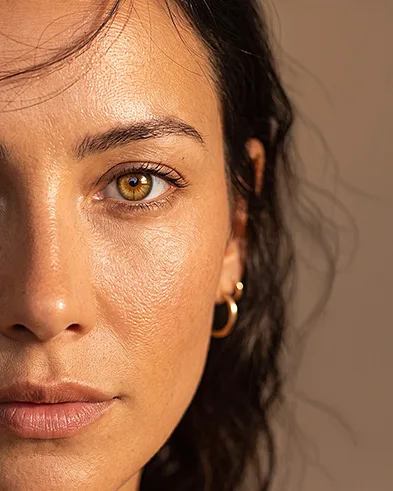
Do your eyes look tired? Does the skin of your lower eyelids form folds and wrinkles? Maybe it’s time for surgery! But which of us isn’t afraid of a scar on the face, right?
The good news is that eyelid skin is extremely thin and delicate; as a result, the scars from lower blepharoplasty become almost imperceptible, contributing to an even more natural result. When it comes to blepharoplasty, did you know that there is no recorded case of keloid formation anywhere in the world? That’s right. This is one fear you don’t need to have!
Where are the scars from lower blepharoplasty located?
In one of the lower blepharoplasty techniques with laser incisions, the incision can be made just below the eyelashes; this is a transcutaneous or myocutaneous procedure. As a result, the line left by the surgery lies in the shadow of the lashes, well camouflaged and almost imperceptible from the start.
Another way to perform eyelid surgery is through the transconjunctival technique, that is, the fat bags are removed through the inner part of the eyelids (the incision is made in the conjunctiva), so there is no cut in the skin at all. This procedure is indicated for patients who have excess fat in the eyelids but no excess skin.
What do blepharoplasty scars look like?
The scars from laser lower blepharoplasty are planned so that they are concealed along the natural folds of the eyelids. And the tone of the lower eyelid can be improved by combining the surgery with other procedures, such as canthopexy or canthoplasty.
What about the stitches? They are removed around two to five days after surgery, according to your surgeon’s recommendation. If the eyelid surgery is performed internally, there is no need to remove stitches, as they are absorbable, but it is essential to attend the scheduled postoperative appointments.
Watch Dr. Rogério Leal’s video and see his explanation of where the scars are placed:
How does the healing process work?
The process can vary from one patient to another. Besides each body’s response, recovery is also influenced by the technique the surgeon uses, as well as by the equipment.
For a smooth recovery, it is also essential to follow medical instructions, for example:
Healthy habits and pre- and postoperative care
Maintain a balanced diet, following the dietary guidance provided by the medical team, aiming not only at the pre- and postoperative periods but also at a better quality of life. The result is even better when this diet is combined with light, regular physical exercise.
This way, you keep your body healthy and well prepared to go through the procedure and the years ahead.
What extra care should I take for good healing?
Care related to drooping eyelid surgery should begin as soon as you decide to have it. Remember that one of the most important steps, even before surgery, besides getting all your questions answered at the preoperative consultation, is to have all the laboratory tests ordered by the surgeon.
In addition to all the information mentioned in the previous sections, patients should pay attention to the information given by the doctor throughout the whole process of consultations and follow-up visits. Carefully reading all the written materials the medical team gives you is essential for remembering important points of pre- and postoperative care, as well as for helping clarify any questions.
Want to know more? Send a message on Dr. Rogério Leal’s social media and he will be happy to answer.
This content is for informational purposes only and does not replace a consultation. Whether any procedure is indicated depends on an in-person assessment, case by case. CRM SP 90.116 | RQE 11.350.